
Accidental spills, splatters and greasy fingerprints are bound to happen, especially if you cook every day — however, many people overlook regular cleaning of their kitchen cabinets.
Regardless of whether your kitchen cabinets are made of glass, wood, laminate, or painted materials, they lose their visual appeal when covered in grime, stains, or dust. Not only does this affect the aesthetics of your kitchen, but dirty cabinets could also harbor bacteria or viruses, potentially causing harmful effects.
How to Clean Cabinets Regularly?
Whether your cabinets are made of finished wood, laminate, or painted wood, follow these simple cleaning kitchen cabinets tips and instructions to maintain a clean and bright kitchen.
- Apply a safe, grease-cutting all-purpose cleaner or a mixture of dish soap and water to a cloth. Make sure the cloth is damp, but not excessively wet.
- Wipe both sides of the cabinet door, paying close attention to knobs and drawer pulls, as they often accumulate greasy fingerprints.
- For stubborn grime, especially on cabinets above the stove, wrap a soft scrub pad in a cloth and gently wipe clean.
- Consider using a damp cloth to rinse the cabinet doors until there’s no soap or cleaner residue.
- Buff dry using a microfiber cloth. If you’re using a cabinet cream for finished wood cabinets, buff afterward but first, please read label directions.

What Are Best Cleaning Supplies for Kitchen Cabinets?
Whether your cabinets require a simple wipe down or a thorough cleaning, some of the best cleaning supplies are already in your kitchen. A mixture of dish soap and water works wonders for cutting through grease, splatters, and food stains. Opt for a soft cloth or sponge for gentle yet effective cleaning. Microfiber cloths are particularly useful as they trap dust and dirt to prevent soil from spreading. Avoid abrasive materials like strong detergents and scouring pads, as these can scratch or dull your cabinets.
How to Remove Cooking Grease from Kitchen Cabinets?
Kitchen cabinets are meant for storing dishes, not accumulating grease and grime. However, wood cabinets often end up collecting all sorts of kitchen residue.
Here’s a simple guide to cleaning greasy kitchen cabinets:
Prepare the Cleaning Solution:
Mix a few drops of your trusted cleaning agents with warm water in a bowl. Dip a sponge into the solution and squeeze until suds form. Most eco-friendly cleaning agents effectively tackle grease on kitchen surfaces.
Test and Scrub:
Before scrubbing the entire cabinet, test the solution first. Then, use the soft side of the sponge to scrub the greasy surface back and forth until the soil is removed. Follow the grain of the wood if applicable.
Handle Stubborn Stains:
For tougher stains, apply a squirt of your trusted cleaning agent directly to a sponge or dishcloth under warm running water. Gently scrub the greasy surface to tackle stubborn messes.
Rinse and Wipe:
Use a damp paper towel to wipe down the cabinets and remove any remaining grease and excess soap. Leaving excess residue may cause etching on certain materials.
Dry Thoroughly:
Immediately dry the surfaces with a clean paper towel or reusable cloth to prevent streaking.
Read more from our post: Strategies for Wax and Grease Remover at Home
How Often Should We Clean Our Kitchen Cabinets?
Here’s a simple guide to keeping your kitchen cabinets clean throughout the year:
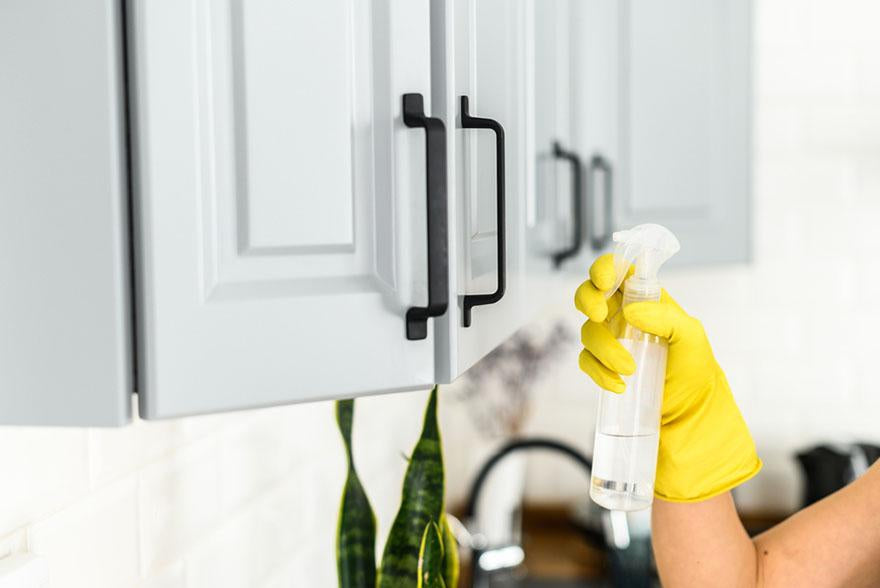
Daily Cleaning: Wipe up any splatters or spills with a damp cloth as soon as they occur while cooking. Cleaning as you go will reduce the need for deeper cleaning sessions.
Monthly Cleaning: Give your cabinets a quick touch-up by wiping the outside surfaces once a week using your preferred cabinet cleaner.
One to Two Times Per Year Cleaning: Schedule a deeper clean for your cabinets in the fall and spring. Take everything out and clean both the inside and outside of each cabinet for a thorough refresh.
What Cleaning Agents to Avoid?
- Although most cleaning experts recommend a mixture of olive oil and baking soda as a cleaning agent, this cleaner does not work well with wooden cabinets. Instead, opt for a wood-safe cleaner to preserve the integrity of your wooden surfaces and enhance their longevity. Ensure you follow manufacturer recommendations for cleaning solutions suitable for your specific cabinet material.
-
Vinegar is a tested cleaner and disinfectant; however, Maggy maid cleaning experts do not recommend this because it can ruin the wood’s finish. While effective on certain surfaces, vinegar’s acidic nature may adversely affect the protective layer on wood, potentially compromising its integrity. Instead, opt for wood-specific cleaning products to ensure the longevity and beauty of your wooden surfaces.
Prevent Mess from Building Up
To avoid grease and grime from building up on your kitchen cabinets, wipe your cabinet fronts using a damp microfiber cloth and a dry cloth or paper towel once finished. Additionally, regularly inspect and clean cabinet handles to prevent bacterial growth and maintain a hygienic kitchen environment. Incorporate this simple yet effective routine into your kitchen cleaning practices for long-lasting cabinet cleanliness.
Maggy Maid San Diego has experts to help you with your house cleaning routines. We offer professional cleaner insights for effective cleaning strategies tailored to your specific needs. Additionally, our team understands the importance of eco-friendly practices, that is why we offer sustainable cleaning tips for a healthier home and environment.